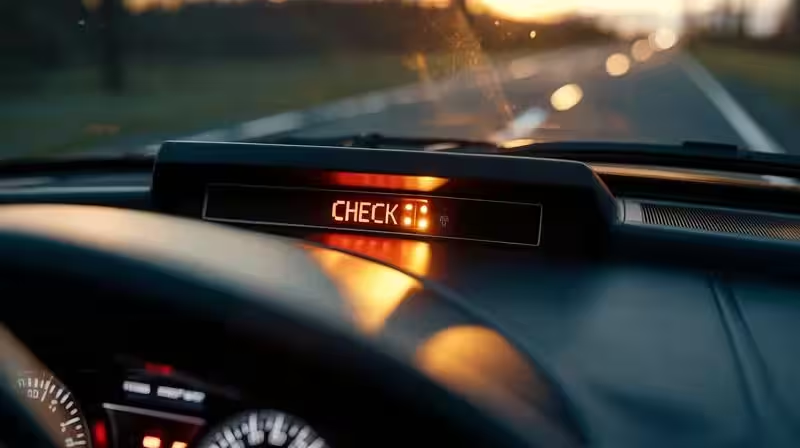
Quick answer: a steady check engine light means your car has logged a fault code — it is usually safe to keep driving, but get it diagnosed soon. A flashing check engine light signals an active misfire that can destroy your catalytic converter: slow down, avoid hard acceleration, and get to a shop right away. A quick diagnostic scan tells you exactly which issue triggered the light.
From our bays: the check-engine codes we pull most often on New Westminster vehicles are loose or failed gas caps, oxygen sensors, and misfires from worn spark plugs. We always scan the stored code before quoting any work, because guessing at a check-engine light is how drivers end up paying for parts their car never actually needed.
Few things cause more anxiety for car owners than seeing that amber engine-shaped light appear on their dashboard. Is it something minor? Something expensive? Is your engine about to quit?
The truth is, the check engine light covers a wide range of possible issues. Understanding what it means — and what it does not mean — can help you respond appropriately.
What the Check Engine Light Actually Does
Your vehicle has an onboard diagnostic system called OBD-II that continuously monitors dozens of engine and emission systems. When a sensor detects a reading outside its normal range, the system stores a diagnostic trouble code and illuminates the check engine light to alert you.
The light itself does not tell you what is wrong. It tells you that something needs attention. A professional diagnostic scan reads the stored codes and gives technicians a starting point for diagnosis.
Common Causes (From Simple to Serious)
Loose or damaged gas cap: This is the most common and least serious cause. A loose gas cap allows fuel vapours to escape, triggering the evaporative emission system monitor. Tighten or replace the cap and the light should clear after a few drive cycles.
Oxygen sensor failure: The O2 sensor monitors how much unburned oxygen is in the exhaust. A failing sensor can reduce fuel efficiency by up to 40 percent and cause the engine to run rich or lean.
Catalytic converter issues: The catalytic converter reduces harmful exhaust emissions. When it starts failing, you may notice reduced power, poor fuel economy, and a rotten egg smell. Replacement can be costly, but it is required for emissions compliance.
Mass airflow sensor: This sensor measures the amount of air entering the engine. A faulty MAF sensor causes rough idling, hesitation during acceleration, and reduced fuel economy.
Spark plugs or ignition coils: Worn spark plugs or failing ignition coils cause misfires, which can damage the catalytic converter over time. If you feel the engine stumbling or hesitating, this could be the cause.
Transmission problems: In some vehicles, certain transmission issues will trigger the check engine light rather than a separate transmission warning light.
Steady Light vs. Flashing Light
There is an important difference:
A steady check engine light means the system has detected an issue that needs attention, but it is not immediately dangerous. You can continue driving to your destination and schedule service soon.
A flashing check engine light is urgent. This typically indicates an active misfire that could damage the catalytic converter. Reduce speed, avoid hard acceleration, and get to a repair shop as soon as possible.
Why You Should Not Ignore It
Even a steady check engine light should not be ignored long-term. What starts as a minor sensor issue can cascade into more expensive problems. A failing O2 sensor, for instance, can gradually damage the catalytic converter — turning a $200 repair into a $2,000 one.
Additionally, if your check engine light is on, you will fail a vehicle inspection, which is required for registration transfers, out-of-province vehicles, and commercial use.
Get a Diagnostic Scan in New Westminster
At Tire Point Automotive, we use professional-grade diagnostic equipment that goes beyond basic code readers. We do not just read the code — we diagnose the actual problem and explain your options clearly.
Visit us at 920 Agnes Street in New Westminster or call (604) 524-9747 to book a diagnostic appointment.
Official sources & further reading
The B.C. and federal standards referenced in this guide: