Quick answer: most modern vehicles running full synthetic oil can go 10,000 to 15,000 km between oil changes, while older engines and conventional oil still need service closer to the traditional 5,000 km mark. Your driving habits matter too — short trips, towing, and stop-and-go traffic all shorten the interval. Check your owner's manual and follow the shorter of the two recommendations.
From our bays on Agnes Street: the engines we see with the worst sludge buildup almost always belong to drivers doing short New Westminster commutes on conventional oil stretched well past 8,000 km. On short trips the oil never gets hot enough to burn off moisture, so it thickens faster. We flag it during every oil change so owners can shorten their interval before it turns into a repair.
One of the most common questions we hear at Tire Point Automotive is: "How often do I really need an oil change?" The answer is not as simple as the old 5,000 km rule your dad might have taught you. Modern engines and oils have changed the game — but that does not mean you can ignore maintenance.
Why Oil Changes Matter
Engine oil serves multiple critical purposes. It lubricates moving parts to reduce friction and wear, helps cool the engine by carrying heat away from combustion chambers, prevents corrosion on internal metal surfaces, and keeps your engine clean by carrying contaminants to the oil filter.
When oil degrades, it loses its ability to do these jobs effectively. Old oil becomes thick and sludgy, which forces your engine to work harder, reduces fuel economy, and can eventually lead to costly damage.
Conventional Oil vs. Synthetic Oil
The type of oil in your engine is the biggest factor in determining your change interval:
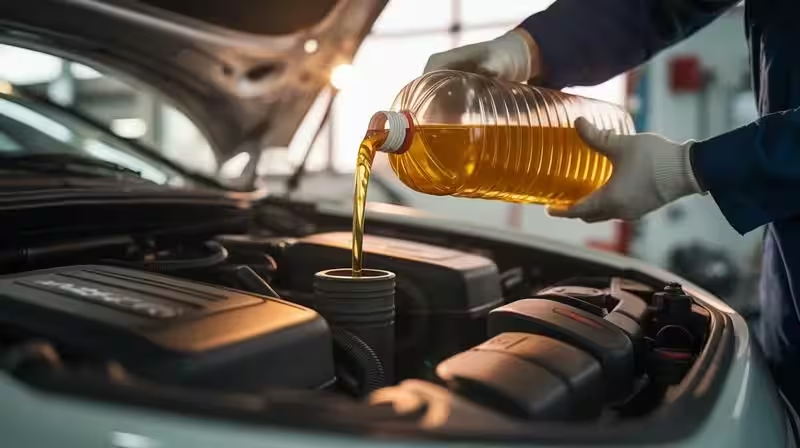
Conventional oil breaks down faster under heat and stress. If your vehicle uses conventional oil, plan for a change every 5,000 to 8,000 kilometres or every three to four months — whichever comes first.
Full synthetic oil is engineered to resist breakdown much longer. Most synthetic oils can safely go 10,000 to 15,000 kilometres between changes, though we recommend checking your owner's manual for your specific vehicle.
At Tire Point Automotive, we always use quality oils and filters that meet or exceed your vehicle manufacturer's specifications. We will recommend the right product for your car, truck, or SUV.
Driving Habits That Shorten Oil Life
Not all kilometres are equal. Certain driving conditions are classified as "severe" by manufacturers and can cut your oil change interval significantly:
- Short trips under 10 km — the engine never reaches full operating temperature, which allows moisture and fuel to accumulate in the oil
- Stop-and-go city driving — constant acceleration and braking puts more stress on the engine than highway cruising
- Driving in extreme temperatures — both the cold winters and hot summers we experience in the Lower Mainland can accelerate oil degradation
- Towing or hauling heavy loads — extra weight means extra engine strain
- Dusty or gravel roads — contaminants enter the engine faster
If any of these sound like your typical driving routine, consider shortening your oil change interval by 20 to 30 percent.
Warning Signs You Need an Oil Change Now
Do not wait for the dashboard light. Watch for these signs that your oil is past its prime:
- Oil looks dark and gritty on the dipstick instead of amber and translucent
- Engine sounds louder than usual, especially a ticking or knocking noise at startup
- You notice decreased fuel economy without a change in driving habits
- The oil level drops noticeably between checks
- A burning smell when driving, which can indicate oil leaking onto hot engine components
The Bottom Line
Regular oil changes are the single most cost-effective way to extend your engine's life. Skipping or delaying this basic maintenance can lead to repairs that cost thousands of dollars.
At Tire Point Automotive, a full oil change takes about 30 minutes and includes a complimentary multi-point inspection. We are located at 920 Agnes Street in New Westminster and open Monday through Friday 9 AM to 5 PM, plus Saturdays 10 AM to 4 PM.
Call us at (604) 524-9747 or visit our contact page to book your next oil change.
Official sources & further reading
The B.C. and federal standards referenced in this guide: