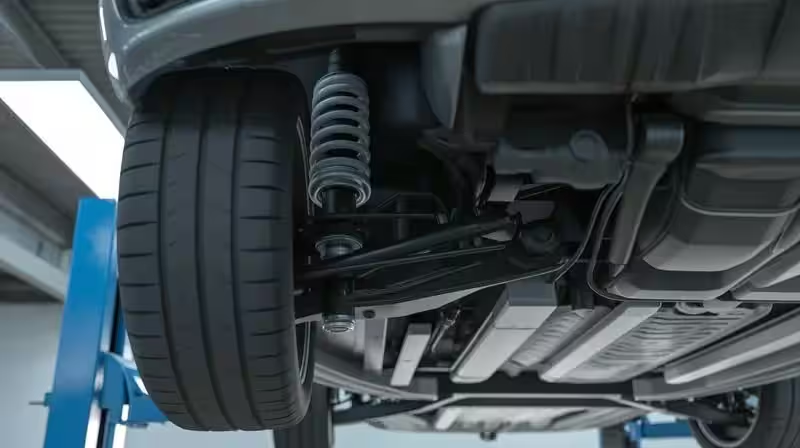
Quick answer: the most common signs your suspension needs repair are a bouncy or drifting ride, nose-diving when you brake, uneven or cupped tire wear, clunking noises over bumps, the vehicle sitting lower on one corner, and visibly oily or damaged shocks or struts. Worn suspension lengthens stopping distances and accelerates tire wear, so have these symptoms inspected promptly.
From our bays: New Westminster's potholes and steep hills are hard on shocks and struts, and the suspension wear we catch most often first shows up as uneven, cupped tire wear. We check the ride components whenever a car is up on the hoist for tires, because worn shocks quietly chew through an otherwise fresh set.
Most drivers think of suspension as a comfort feature — something that makes the ride smooth over bumps and potholes. But your suspension system is primarily a safety system. It maintains tire contact with the road, controls body movement during turns and stops, and works directly with your steering and braking systems.
When suspension components wear out, your vehicle becomes less safe, less fuel-efficient, and harder to control. Here are six signs to watch for.
1. A Rough or Bouncy Ride
This is often the first thing drivers notice. If your vehicle bounces excessively over bumps, feels harsh over imperfections you used to glide over, or continues rocking after going over a bump, your shocks or struts are likely worn.
A simple test: push down firmly on one corner of your vehicle and release. If it bounces more than once or twice before settling, the shock absorber on that corner is not doing its job.
2. The Vehicle Nose-Dives When Braking
If the front of your car dips sharply when you brake, your front struts are worn. This is more than an annoyance — it shifts weight forward and can increase stopping distances by up to 20 percent. In an emergency braking situation, that extra distance matters.
3. Your Car Drifts or Pulls During Turns
Healthy suspension keeps your vehicle body stable through turns. If you feel the body leaning or rolling excessively when cornering, or if the vehicle feels like it wants to drift to the outside of the turn, your stabilizer bar links, bushings, or struts may be worn.
This makes the vehicle less predictable and increases the risk of rollover in extreme situations.
4. Uneven Tire Wear
Your suspension keeps your tires flat against the road surface. When components wear, your tires may tilt or bounce, causing cupping (scalloped wear), feathering (smooth on one side, sharp on the other), or one-sided wear.
If you notice unusual tire wear patterns, have your suspension checked before investing in new tires. New tires on a worn suspension will develop the same wear patterns quickly.
5. Visible Damage or Leaking Fluid
Get under your vehicle and look at the struts and shocks. If you see oil or fluid on the outside of the shock body, the seals have failed and the shock is leaking. A leaking shock has lost its damping fluid and is not functioning properly.
Also look for cracked or broken rubber bushings, bent components, or loose connections.
6. Steering Feels Loose or Vague
If your steering wheel has more play than usual, or if the vehicle does not respond as crisply to steering input, worn suspension components may be the cause. Tie rod ends, ball joints, and control arm bushings all affect steering precision.
Suspension Repair in New Westminster
At Tire Point Automotive, we perform complete suspension inspections that check every component. We will show you exactly what is worn and explain the priority of each repair. Not everything needs fixing at once — we will help you plan the most important repairs first.
Call us at (604) 524-9747 or visit 920 Agnes Street in New Westminster.
Official sources & further reading
The B.C. and federal standards referenced in this guide: